Check the directions for your sponge
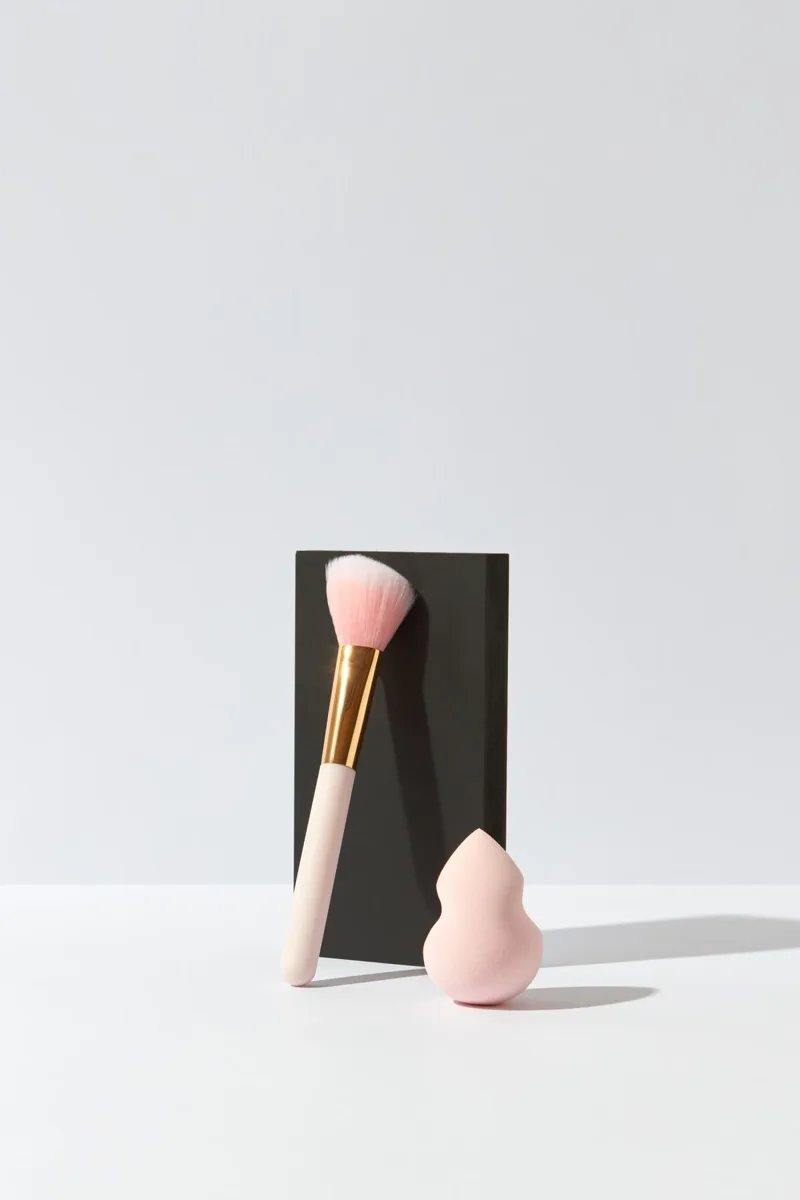
Makeup sponges do not all have the same composition or care instructions. Before choosing a cleanser, check what the manufacturer recommends. Beautyblender advises washing its sponges after every use and discourages microwave or vinegar tricks. That guidance applies to its own material; it should not replace the care instructions supplied by another brand.
Pick a realistic moment for cleaning, whether after applying makeup or as part of another sequence you can maintain. Keep the appropriate cleanser nearby and reserve a clean surface for drying. Preparing that small space avoids having to improvise afterwards with a closed container or the damp bottom of a makeup bag.
Wash with gentle pressure
Beautyblender’s official guide describes wetting the sponge, applying its cleanser, gently working up a lather and rinsing with clean water. When squeezing, avoid pulling the surface or digging in your nails. There is no need to twist it as if wringing out clothing. The aim is to remove residue without tearing the material.
Follow the quantity and method specified by the cleanser you choose. If visible residue remains, check the directions before pressing harder or mixing cleaning products. A makeup tool does not need an elaborate homemade recipe. A straightforward method you can repeat comfortably is more practical than relying on an occasional dramatic cleaning session.
Give it room to dry
After rinsing, gently remove excess water and allow the sponge to dry completely in a clean, well-ventilated place, as Beautyblender directs. Do not put it away damp in a closed case. Before travelling, leave enough time for washing and drying, or pack a clean alternative that is already dry and ready to use.
Check the condition of the material and its manufacturer’s replacement advice too. Beautyblender mentions three months in its FAQ, but that interval is not a universal guarantee for every sponge. If the tool is torn or its condition concerns you, adding more cleanser is not the answer. Contact the manufacturer for guidance or replace it.
Sources and further reading
Editorial guide published on October 23, 2026, with sources checked on that date. Not breaking news or personalized advice. The image is illustrative.